
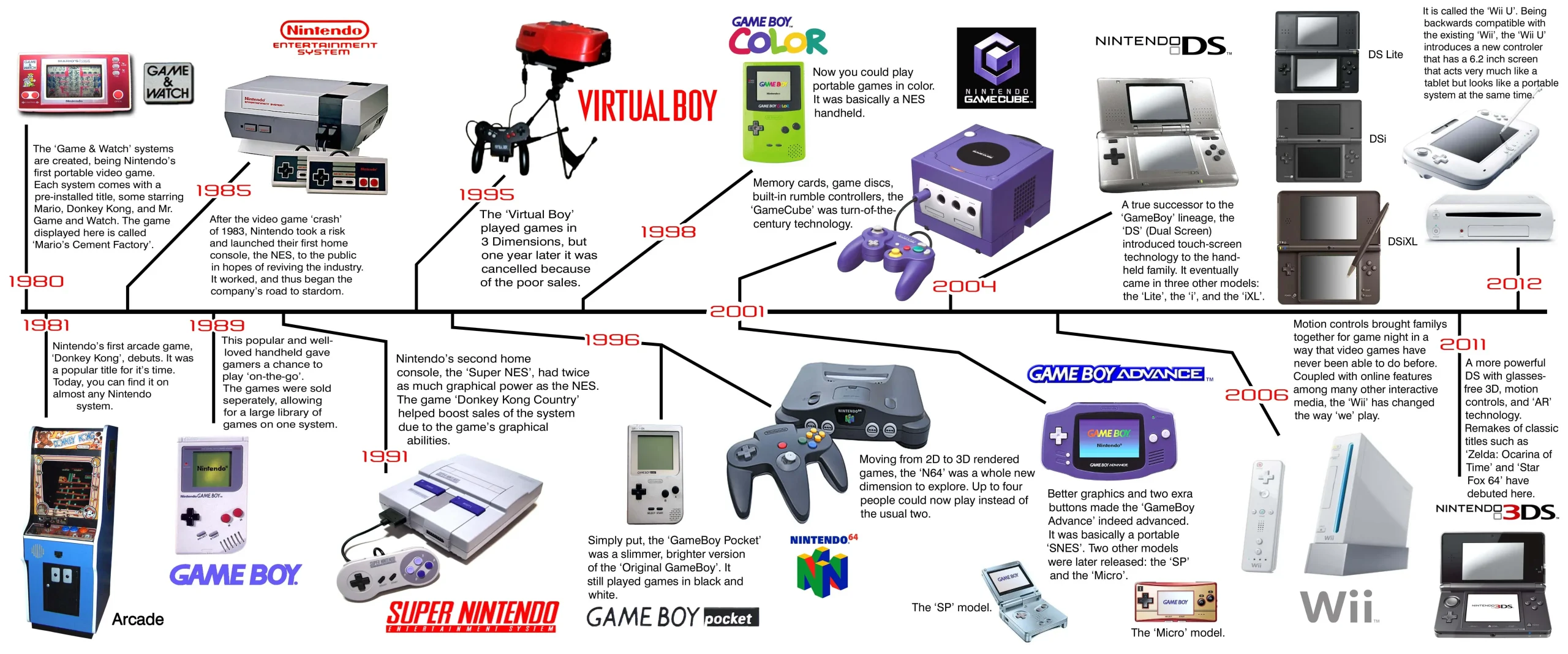
History of Video Games traces how technology, storytelling, and play intersect to shape culture. From the earliest arcade experiments to modern online worlds, this history highlights landmark video game titles that captured imaginations. The evolution of video games reveals a pattern of innovation powered by hardware advances and creative risk-taking. A gaming history timeline helps readers see how game design matured alongside technology and community feedback. These developments became video game industry milestones that propelled growth, experimentation, and shared experiences across generations.
Building on that foundation, the narrative shifts to a more contextual view that uses synonyms and related ideas. Instead of naming specific eras, we spotlight shifts in technology, audience, and design philosophies that enabled more immersive play. By framing the story around concepts like interactive media evolution, community ecosystems, and platform convergence, we align with Latent Semantic Indexing principles. Thus, the journey remains the same at its core, even as terminology evolves to reflect new formats, devices, and modes of creative expression.
History of Video Games: Landmark Titles, Milestones, and the Gaming History Timeline
Exploring the History of Video Games reveals how technology, storytelling, and play intersect to shape culture, with landmark video game titles acting as catalysts for early video game industry milestones. From Pong to Pac-Man to Space Invaders, these titles demonstrated that interactive play could scale beyond a single arcade cabinet and spark global communities and competition.
This history maps a gaming history timeline by linking hardware advances, design breakthroughs, and changing player expectations, showing how each era redefined what games could be.
The Evolution of Video Games: From Classic Video Games to Online Worlds
From early cabinets to modern online ecosystems, the evolution of video games tracks a steady march of technical prowess, design refinement, and expressive potential. Classic video games established enduring mechanics and a design language that continues to influence today’s titles, and landmark video game titles from that era became touchstones for players and developers alike.
As connectivity expanded, industry milestones grew beyond single-player arcs to online multiplayer, live services, and cross-platform ecosystems, illustrating how the evolution of video games has blurred lines between play, storytelling, and social interaction. Understanding this trajectory helps explain why the gaming history timeline reads as a continuous thread of experimentation, risk, and recognition for creative teams.
Frequently Asked Questions
What are the key milestones in the History of Video Games that illustrate the evolution of video games from arcade classics to online worlds?
The History of Video Games traces milestones across eras: the arcade revolution with Pong, Space Invaders, Pac-Man, Donkey Kong, Asteroids and Centipede; the home console era led by the NES with Super Mario Bros, The Legend of Zelda, and Tetris; the 3D revolution with Doom, Quake and Super Mario 64; online play and persistent worlds with World of Warcraft, Halo 2 and Counter-Strike; and the mobile era with Angry Birds and Candy Crush, followed by the indie renaissance and ongoing innovations like VR/AR. These landmark titles and hardware shifts form a cohesive gaming history timeline and highlight how design and technology shaped the industry milestones.
How have landmark video game titles shaped the History of Video Games, influenced video game industry milestones, and informed the gaming history timeline?
Landmark titles illustrate enduring design principles—from accessible gameplay and clear feedback to open exploration, narrative pacing, and multiplayer balance. Examples include Pong and Pac-Man for simplicity and social play, Super Mario Bros and The Legend of Zelda for crafted progression and exploration, Doom and Myst for atmosphere and storytelling on new tech, Quake and Super Mario 64 for 3D control standards, Halo 2 and Counter-Strike for competitive balance, and Angry Birds and Candy Crush for scalable mobile success. Together these moments drive contemporary design, reflect video game industry milestones, and enrich the gaming history timeline with lessons on accessibility, engagement, and innovation.
| Era | Key Developments | Landmark Titles | Impact on Design/Play |
|---|---|---|---|
| Early sparks and birth of an idea | Seed ideas: interactive simulations; electronics + entertainment; groundwork for scalable play | N/A | Play becomes interactive and expressive beyond a single device |
| Arcade revolution | Arcades as cultural hubs; rapid experimentation; competition | Pong, Space Invaders, Pac-Man, Donkey Kong, Asteroids, Centipede | Defined standards for accessible, high-feedback gameplay; industry icons emerge |
| Home console revolution | NES era; competition among Nintendo, Sega, Atari; rise of franchises | Super Mario Bros, The Legend of Zelda, Tetris | Level design mastery, open-world exploration, accessible mechanics |
| Early 3D and immersive worlds | 3D graphics; new possibilities for interactivity | Doom, Quake, Super Mario 64, GoldenEye 007, Myst | New standards for control, camera, atmosphere; cinematic experiences |
| Online play and persistent worlds | Online communities, matchmaking, digital distribution | World of Warcraft, Halo 2, Counter-Strike | Social ecosystems; competitive balance; scalable game models |
| Mobile era | Smartphones/tablets; casual and indie growth; cross-platform play | Angry Birds, Candy Crush | Broad audiences; bite-sized, accessible experiences; indie emergence |
| Indie gems and modern era | Procedural generation; retro revival; VR/AR | Various indie titles; landmark touchpoints | Experimentation; new forms of expression; broader genre diversity |
| Cultural impact & future directions | Global cultural force; streaming; AI; cloud gaming | N/A / ongoing innovations | Informs art, education, business; ongoing evolution |
Summary
Conclusion: History of Video Games reveals a narrative of rapid prototyping, shared wonder, and iterative refinement. From Pong’s spark to vast contemporary worlds, landmark titles, evolving hardware, and dynamic communities have continually redefined what games can be. The journey demonstrates how technology and design collaborate to create experiences that entertain, challenge, and connect people across generations. Looking ahead, the field will likely continue to blur lines among play, storytelling, and social interaction, as cloud, AI, and new interfaces open fresh possibilities for creators and players alike.