
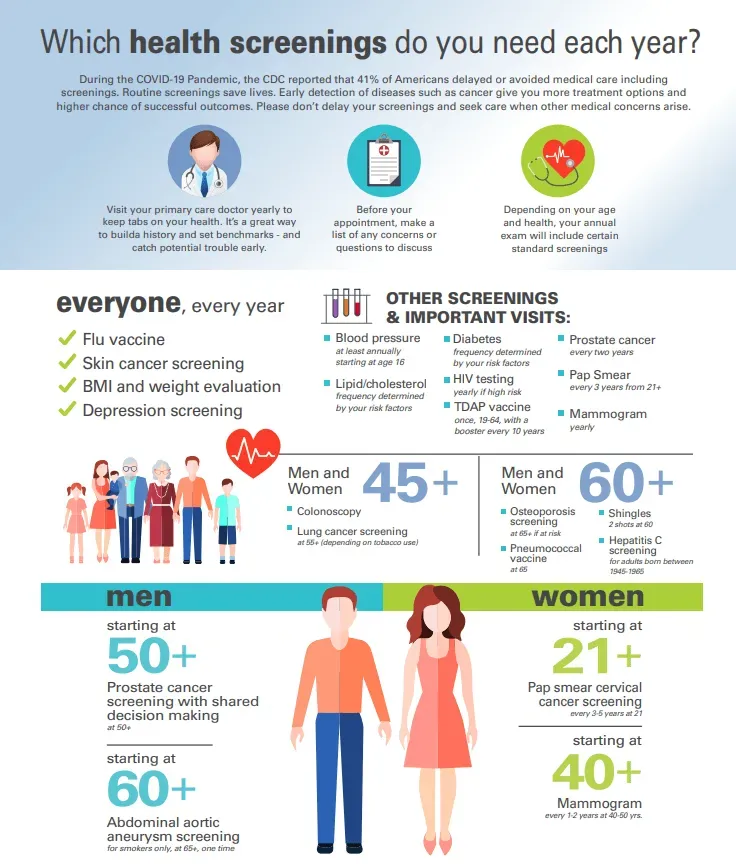
Preventive health screenings 2025 set the stage for proactive wellness, empowering people to act before issues escalate. With evolving guidelines, understanding screening recommendations 2025 helps individuals plan care around personal risk. This guide highlights the role of preventive care guidelines 2025 in shaping when and what tests to schedule. An adult preventive screening schedule tailored to you can improve outcomes while simplifying decision making. By aligning with early detection screenings 2025 and an annual health screening checklist 2025, you can stay on track.
Beyond the specific phrasing, the topic can also be framed as routine wellness checks and screening programs that monitor essential health indicators. In an LSI-friendly approach, health risk assessments, cancer screening, cardiovascular monitoring, and preventive vaccines form a connected web that supports steady, informed care. Talking with your clinician about goals, timelines, and lifestyle, while keeping the broader ideas of prevention in mind, helps build a practical, person-centered plan.
Preventive health screenings 2025: Aligning with screening recommendations 2025 for proactive wellness
Staying on top of Preventive health screenings 2025 means following screening recommendations 2025 and integrating preventive care guidelines 2025 into your daily routine. When you understand which tests are appropriate at different ages and risk levels, you can plan ahead, reduce unexpected health events, and participate in shared decision making with your clinician. This approach helps you build confidence that every screening choice serves your long-term goals and quality of life.
To translate guidance into action, create an adult preventive screening schedule that reflects early detection screenings 2025 and the annual health screening checklist 2025. Use these tools to map out who should be tested, how often, and how results will be tracked. Working with your healthcare team, set reminders, bundle multiple tests when possible, and tailor intervals to your personal risk factors, family history, and values, all while staying aligned with the latest screening recommendations 2025.
Designing your 2025 adult preventive screening schedule: practical steps and considerations
Crafting a practical plan begins with an honest review of your age, sex, and risk factors. A thoughtful adult preventive screening schedule helps you navigate core screenings—blood pressure, lipids, diabetes risk, cancer screens, skin checks, and vaccines—within the framework of preventive care guidelines 2025. By describing your priorities and constraints, you create a living calendar that evolves with updates in screening recommendations 2025 and new research around early detection screenings 2025.
Beyond tests, address barriers like access, cost, and time by leveraging resources such as community clinics, bundled screenings, and telehealth check-ins. Document test results, create a simple record-keeping system, and review your plan annually to adjust for new guidelines and life changes. This process supports the adult preventive screening schedule, keeps you aligned with annual health screening checklist 2025 goals, and reinforces proactive health management.
Frequently Asked Questions
What is Preventive health screenings 2025, and how does an adult preventive screening schedule help me follow screening recommendations 2025?
Preventive health screenings 2025 are evidence-based tests and assessments designed to detect health issues early and guide preventive care. An adult preventive screening schedule is a personalized plan that considers your age, sex, family history, and risk factors while outlining core screenings such as blood pressure, lipids, diabetes risk, cancers (breast, colorectal, cervical), skin checks, vaccines, and organ-function tests. By working with your clinician and following the screening recommendations 2025 and preventive care guidelines 2025, you can time tests appropriately, reduce unnecessary procedures, and stay on track with your health goals.
How can I build an effective 2025 adult preventive screening schedule using screening recommendations 2025 and preventive care guidelines 2025?
Start with a risk check (family history, lifestyle, and existing conditions) and then create a year-by-year plan that covers essential screenings: blood pressure, lipid panel, diabetes risk, age- and risk-appropriate cancer screenings, skin checks, vaccines, and relevant organ-function tests. Use the annual health screening checklist 2025 as a practical guide, and coordinate multiple tests or labs on the same visit when possible to simplify the process. Set reminders for intervals (annual or every few years) and review the plan with your clinician at least annually. This approach aligns with screening recommendations 2025 and preventive care guidelines 2025.
| Aspect | Key Points | Practical Takeaways |
|---|---|---|
| Purpose of preventive screenings | Early detection and prevention; evidence-based practices; personalized plans. | Discuss risk with your clinician; use timely, appropriate testing; tailor plans to you. |
| Core screenings to consider (2025) | BP and cardiovascular risk assessment; lipids and diabetes risk; cancer screenings by age and risk (breast, colon, cervical, lung for high risk); skin checks; immunizations; liver/kidney function when risk warrants. | Know which tests apply to you; prepare per test guidelines; review risk with clinician. |
| Guidelines & decision making | Shared decision making; updated age thresholds; adjusted intervals; consider genetics and lifestyle. | Ask about benefits/harms; request a written schedule; discuss personal risk factors. |
| Lifestyle integration | Nutrition, physical activity, sleep, stress management; avoiding tobacco and excessive alcohol; holistic approach. | Pair screenings with healthy living; set reminders; routine clinician check-ins. |
| Preparation for screenings | Know risk; create a screening calendar; test prep; bring records; understand results. | Collect family history; maintain a health record; ask for plain-language explanations of results. |
| Scheduling steps (2025) | List essential screenings by age/risk; prioritize; set intervals; coordinate tests; review annually. | Map tests by age/risk; coordinate visits; re-evaluate yearly. |
| Special populations | Older adults; risk factors; chronic conditions; life transitions. | Discuss functional status, comorbidities, and life expectancy; tailor to transitions. |
| Barriers & solutions | Cost, access, time, anxiety about results, knowledge gaps. | Explore low-cost options, community health centers, bundled screenings, telehealth, and less invasive alternatives. |
Summary
Below is an HTML table summarizing key points of the provided base content.